
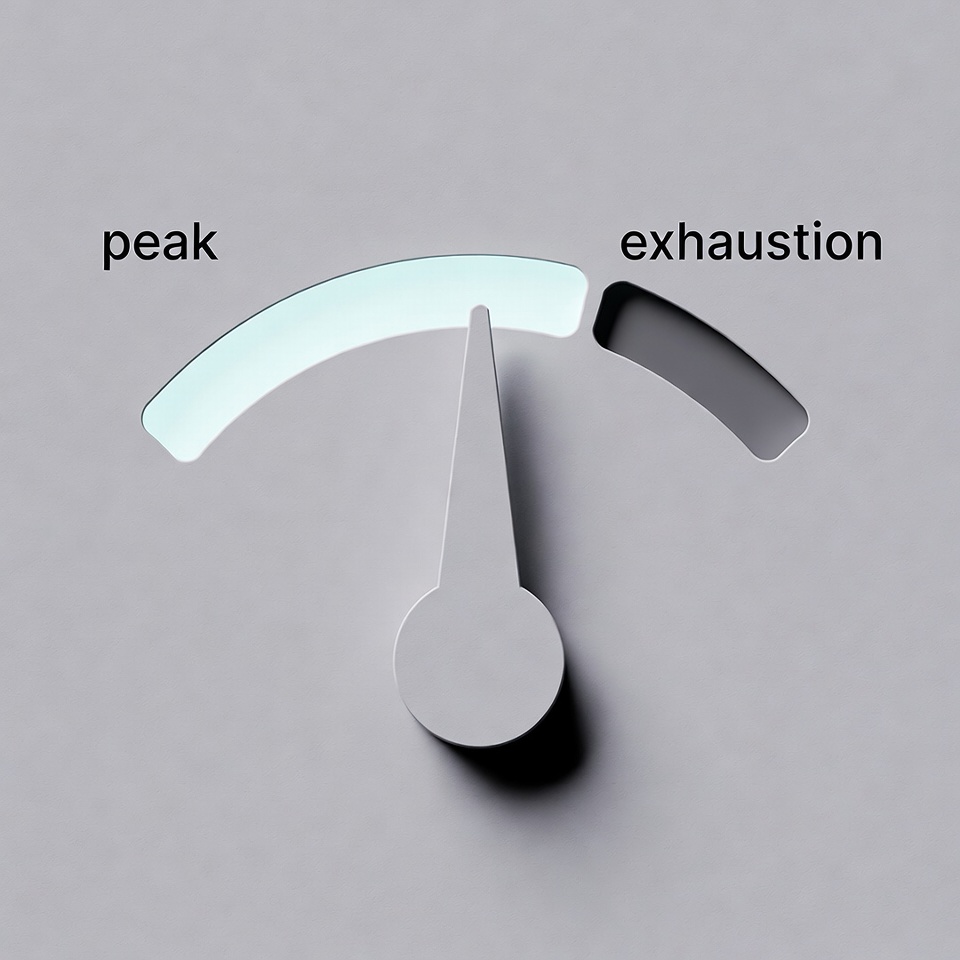
The most common and most costly mistake sellers make is waiting until they are exhausted, burned out, or ready to walk out the door tomorrow. By that point, the business often shows it. Revenue growth has flattened. Key decisions have been deferred. The energy that built the company has quietly left the building.
Buyers price what they see, not what the business used to be or could be. A business showing steady growth commands a materially better multiple than one with a declining trend, even if the underlying operations are identical. That difference can be worth hundreds of thousands of dollars at closing.
There is also a subtler risk that is rarely discussed: the moment an owner makes the internal decision to sell, their relationship with the business quietly changes. Investments get deferred. Decisions slow down. A slight mental disengagement sets in (entirely understandably), and the business can begin to reflect it before the sale process even starts. Waiting too long to act on that decision can cost more than it saves.
A performing business sold today will almost always outperform the same business sold after two years of the owner gradually stepping back.
The best sellers are those who still have options. When you sell from a position of strength, not necessity, you negotiate better, attract more buyers, and close on better terms. The right time is often sooner than you think.

Conventional advice says to give yourself two to three years to prepare for a sale. And if you have that runway and the business is stable, that time can genuinely add value. Clean financials, reduced customer concentration, a stronger management team: each of these improvements is worth real money at closing.
But that advice comes with an important caveat: preparation has diminishing returns, and the risk of over-preparing is real. In practice, 12 to 18 months of focused preparation is enough to address the most material gaps for most service businesses in the $2M–$6M range. Research from the IBBA and BizBuySell consistently shows that well-prepared businesses with 12–24 months of clean financials attract competitive offers and close at market multiples; the marginal gain from a third or fourth year of preparation is rarely significant enough to justify the wait.
More importantly, the longer you spend preparing, the longer you spend in the mentally disengaged state described above. If you have already decided to sell, the best preparation is to move decisively, not to defer the process indefinitely in search of a perfect business that no longer fully has your heart in it.
Focus on the highest-impact improvements. Execute them quickly. Then sell while the business and yourself are still performing at your best.
12 to 18 months of focused preparation is the right target for most owners. Enough to meaningfully improve valuation, not so long that the business and the owner begin to drift before the sale is even started.
From the first serious conversation to closing, a well-run sale process typically takes six to twelve months. Add in the time to find the right buyer and negotiate terms, and a year is a realistic minimum for a smooth transaction.
If you need the proceeds to fund your retirement or your next chapter, factor that timeline in before you decide you are ready. Starting the process before you financially need to - while you still have runway - gives you the patience to find the right buyer rather than the first available one.
Rushed sellers rarely get the best outcomes. Prepared, patient sellers almost always do.
Budget 12 months minimum from first conversation to close. For complex businesses or those with unclear financials, 18 months is more realistic. Plan accordingly.


Owners who reach out directly to buyers, before formally listing with a broker, often find the process simpler, faster, and more confidential. You control the conversation. You choose who learns about the sale. And you avoid the signal that a public listing sends to your employees, customers, and competitors.
There is also a financial case worth understanding clearly. Business brokers typically charge a commission of 8% to 12% of the sale price for transactions under $1M, and 5% to 10% for businesses in the $1M–$5M range, with many applying the Lehman Formula or a flat percentage. On a $3M transaction at 8%, that is $240,000. On a $5M transaction at 6%, that is $300,000. These are not trivial numbers, and they come directly out of what the seller walks away with.
That said, it is important to be objective about what brokers provide. For sellers who are unfamiliar with how to value their business, how to identify and qualify buyers, how to structure a deal, or how to prepare the documentation a serious buyer will require, a broker's expertise can be genuinely valuable and may more than justify the commission. The relevant question is not whether brokers add value in general, but whether they add enough value in your specific situation to justify what you will pay.
Owners who are willing to do some initial research - understanding their own valuation, knowing what buyers are looking for, and being prepared to have a direct conversation - are often well-positioned to approach the process without a broker, at least initially. A direct conversation with a serious, experienced buyer costs nothing and can quickly tell you whether a formal listing process is necessary at all.
Alex Naumov offers a no-obligation, confidential business assessment - an honest conversation about what your business is worth today, what a buyer would see during due diligence, and what steps, if any, would meaningfully improve your outcome before you go to market. There is no commitment, no pressure, and no fee. If you are curious, reach out directly at alex.naumov@rospex.com or use the contact form below.